

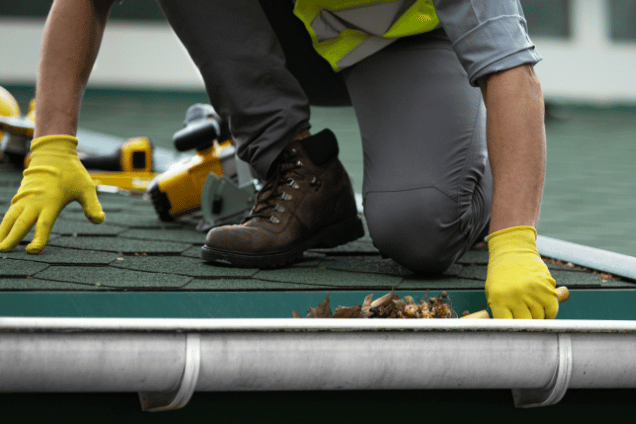
Injured Raking, Roofing, or Cleaning Gutters? Your Employer Still Owes You.
Fall is cleanup season, and cleanup work happens on ladders, on rooftops, and behind loud machines. Much of it is done by crews hired for a few weeks and paid in cash. When one of those workers gets hurt, the excuses start. Ohio law has an answer for each one.
“It’s Just Yard Work”
The federal numbers say otherwise. Roofers died on the job at a rate of 51.8 per 100,000 workers in 2023, nearly 15 times the 3.5 rate for all workers. Grounds maintenance workers died at a rate of 20.5 per 100,000, and 844 workers were killed in falls, slips, and trips nationwide in 2024.
“You’re Only Seasonal”
Coverage does not depend on how long the job lasts. Ohio’s definition of an employee reaches further than most bosses want to admit:
- It expressly includes minors and non-citizens
- Casual workers count once they earn $160 in a calendar quarter from one employer
- Household workers count once they earn $160 in a quarter from a single household
“You’re a Contractor, Not an Employee”
A 1099 does not settle it. For work under a construction contract, Ohio lists 20 factors, and a worker who meets at least 10 of them is an employee. The factors include being required to do the work personally and being paid by the hour or week. What matters is how the job actually ran, not what the paperwork calls you.
“We Don’t Carry Workers’ Comp”
That’s the employer’s problem, not yours! An employee of an uninsured employer can still file with the Bureau of Workers’ Compensation. If the employer does not pay within 10 days of notice, the attorney general is directed to sue to collect. You can also sue, and the employer loses three major defenses, including the claims that you were careless or accepted the risk.
“You Should Have Been More Careful”
Workers’ comp is not a fault contest. Ohio law denies benefits for a short list of reasons, such as purposely self-inflicted injuries and intoxication, and ordinary carelessness is not on it. Safety on the job is the employer’s duty. Fall protection tops OSHA’s list of most-cited standards, and ladders rank fifth. The rules are specific:
- Fall protection is required at 6 feet on construction work, including roofing
- Ladder side rails must extend at least 3 feet above the landing
- Ohio’s Constitution adds an extra award of 15 to 50 percent of the maximum when an employer’s violation of a specific safety requirement caused the injury
If you were hurt on a roof, a ladder, or a landscaping crew and your employer is dodging responsibility, the Law Offices of Tim Misny can help. I’ll Make Them Pay!® Call my office at (877) 614-9524 so I can evaluate your case right away.